Arabic Conversation for Kids
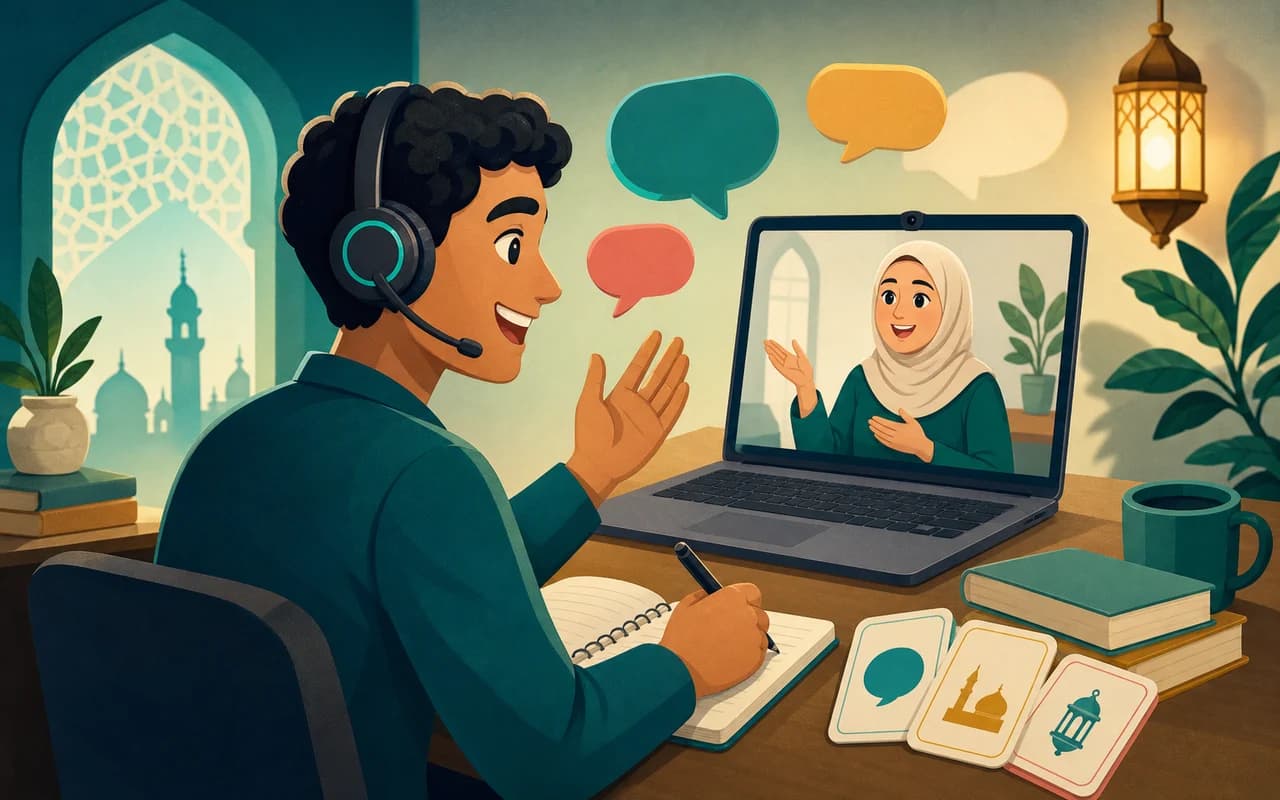
Many children understand some Arabic but don't dare speak it. This course focuses on speaking: short dialogues, role plays, picture descriptions and questions on topics for their age, with kind correction that builds confidence.
Book in 30 seconds
Your first name and WhatsApp number are all we need — we pick the time with you on WhatsApp.
Your details are only used to arrange your class — never sold. Privacy policy
About this course
Many children understand some Arabic but don't dare speak it. This course focuses on speaking: short dialogues, role plays, picture descriptions and questions on topics for their age, with kind correction that builds confidence.
Daring to speak Arabic: dialogues, role plays and speaking practice for children.
- First class :Free
- Course type :Individual (1-on-1)
- Length :~3–12 months
- Requirements :Basic Quran reading
What you will learn
- Dare to speak Arabic
- Understand and answer questions
- Describe pictures and situations
- Grow spoken vocabulary
- Gain confidence
Course program
Breaking the ice
- Introducing yourself and family
- Greetings and questions
- Q&A games
Telling
- Your day and activities
- Likes and dislikes
- Describing a picture
Role plays
- At the market, school, home
- Asking and offering
- Inventing a dialogue
Speaking at length
- Telling a short story
- Giving a simple opinion
- Guided presentation
Who this course is for
Children who understand but don't speak
Turning understanding into speaking.
Children who already read
From written to spoken.
Shy children
Small steps and encouragement.
Your teachers



Frequently asked questions
How does the first class work?
The first class is free. The teacher gets to know the student, assesses their level and proposes a plan. You decide afterwards, with no commitment.
Do they need to read already?
Not essential; the teacher checks in the first class.